Skip to content
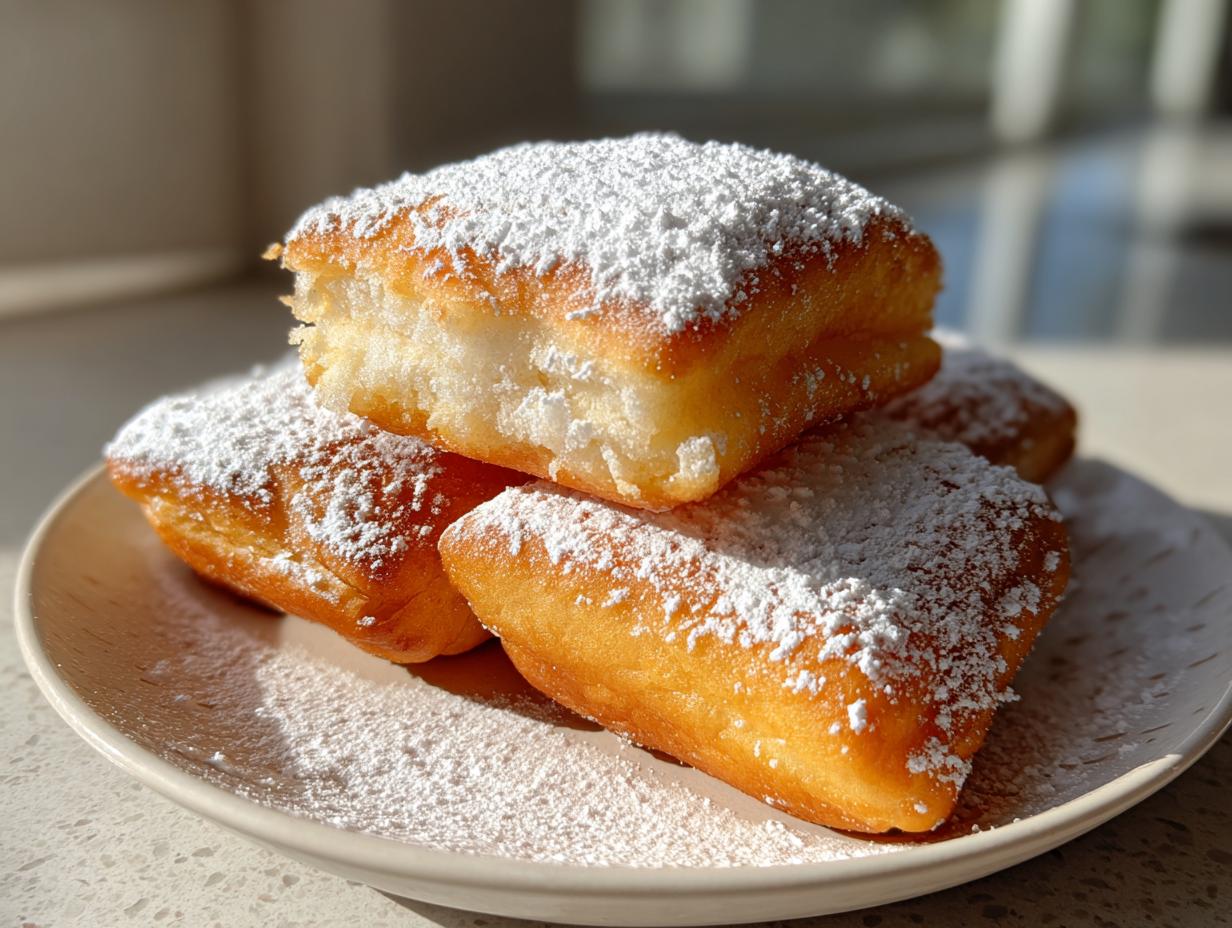
If you’ve ever dreamed of biting into a cloud of warm, pillowy fried dough that melts instantly in your mouth, you have to try making Vanilla French Beignets right here in your own kitchen. Forget the complicated trips to the French Quarter! I’m Anna Kowalska, and here I share tried-and-true homemade recipes that you and your family will love. Everything I post is made with heart and flavor, and these beignets are proof of that—they are surprisingly easy.
This recipe is all about transforming simple pantry staples into something truly magical. We’re going for that perfect puff and that signature dusting of sweet snow. While they are famous in New Orleans, making these light, fluffy pillows of joy is a wonderful weekend project. I promise, once you smell the vanilla hitting that hot oil, you’ll be hooked on making these Vanilla French Beignets forever.
Next up, we need to make sure we have all our ducks in a row before we start mixing, because timing is everything with yeast!
Jump to:
Essential Ingredients for Your Vanilla French Beignets
To make truly spectacular Vanilla French Beignets, you need to pay attention to a few details right from the start. Don’t try to sneak in substitutes for the good stuff here; the yeast, the milk, and the vanilla are the stars of the show! We are looking for lightness, and these ingredients ensure we get that perfect, airy result.
Here is what you need gathered before you even turn on the stove:
| Item | Quantity |
|---|---|
| Warm Milk | 1 cup (105-115°F) |
| Active Dry Yeast | 1/4 ounce (about 2 1/4 tsp) |
| Granulated Sugar | 1/4 cup |
| Large Egg | 1 |
| Vanilla Extract | 1 teaspoon |
| Salt | 1/2 teaspoon |
| Unsalted Butter, melted | 1/4 cup |
| All-Purpose Flour | 3 1/2 to 4 cups |
| Vegetable Oil | For frying |
| Powdered Sugar | For dusting |
Ingredient Checklist and Preparation Notes
Listen, the milk temperature is non-negotiable for happy yeast! It must be between 105 and 115 degrees Fahrenheit. Too cold and the yeast sleeps; too hot and you kill it dead! Also, when you measure the flour, start with 3 1/2 cups. The humidity where you live seriously affects how much flour you’ll need. If the dough is still sticking to your hands like glue after kneading, add that last half cup slowly until it’s manageable but still soft.
Equipment Needed for Perfect Vanilla French Beignets
You don’t need a commercial kitchen to make amazing Vanilla French Beignets, but you do need the right tools for the job. Grab your biggest mixing bowls because this dough expands! You’ll definitely need a sturdy rolling pin to get that dough thin, and don’t forget your measuring cups for accuracy.
The most important piece of gear, though, is what you cook them in. I use my big cast-iron Dutch oven, but a dedicated deep fryer works great too. Finally, you absolutely must have a slotted spoon or spider strainer to rescue those golden pillows once they’re done frying.
Maintaining the Correct Frying Temperature
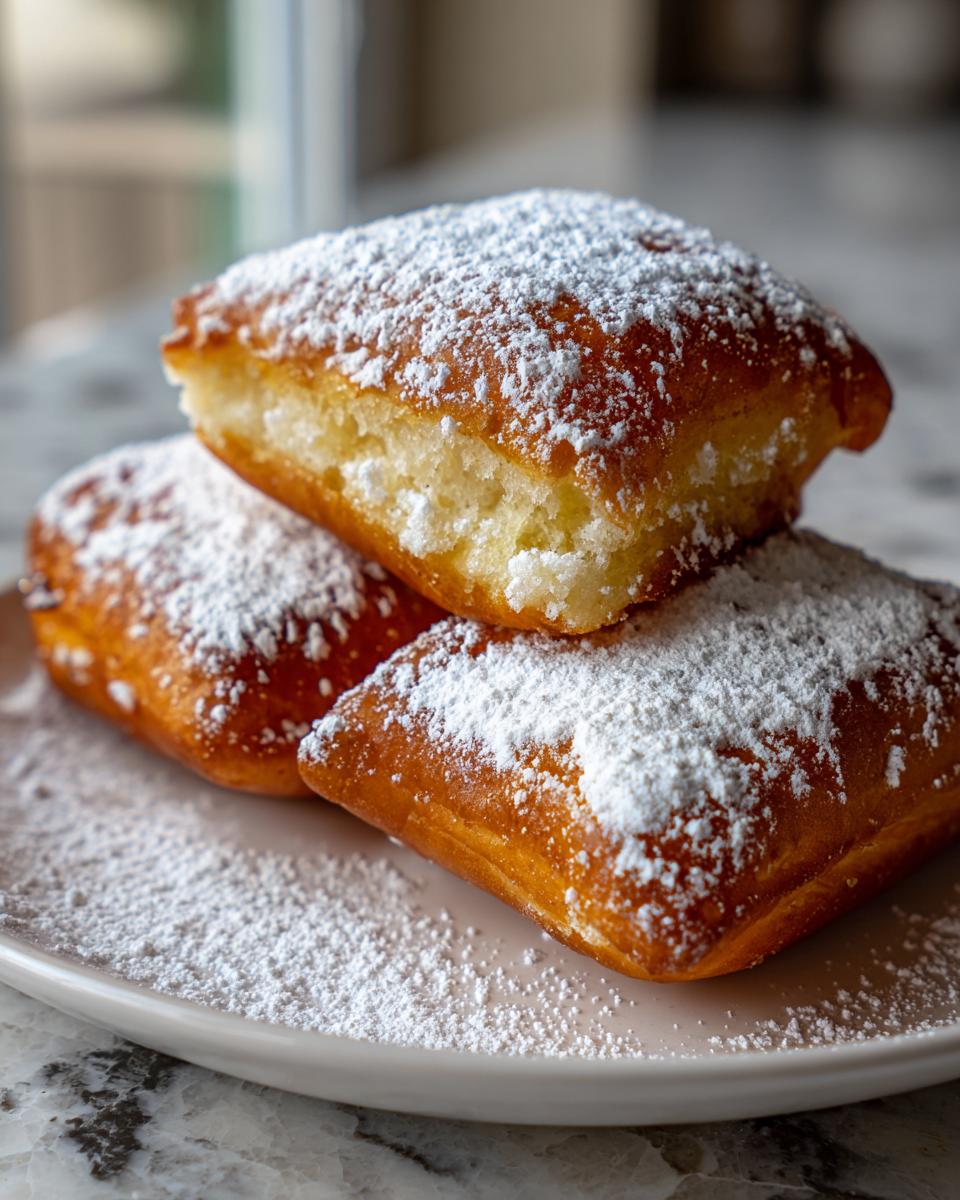
The temperature of your oil is the single biggest secret to that signature puff! If the oil is too cool—say, below 340°F—the beignets will just soak up grease like little sponges and turn out heavy. That’s not what we want at all!
You need that oil hovering right around 350°F (175°C). If it’s too hot, the outside burns before the inside cooks through. Trust me, keep a thermometer handy! We’re aiming for perfectly puffed, light centers and a beautiful, even golden-brown crust. A little patience here pays off big time.
Step-by-Step Instructions to Make Vanilla French Beignets
Okay, time to get our hands dirty! Making these doughs requires a little bit of time, but the steps themselves are straightforward. The magic happens when you let the yeast do its job, so don’t rush the rising stages. We’re making light and fluffy Vanilla French Beignets here, not hockey pucks!
Activating the Yeast and Mixing the Dough
First things first, we need to wake up that yeast. Take your warm milk—and remember, aim for that sweet spot between 105 and 115 degrees Fahrenheit. If you don’t have a thermometer, it should feel pleasantly warm, like bathwater, not hot! Sprinkle in your yeast and a tiny pinch of the sugar. Give it a gentle stir and just let it sit on the counter for about five to ten minutes. If it gets foamy and bubbly on top, great! That means your yeast is alive and ready to work its magic.
Once you have that nice foamy cap, whisk in the rest of your sugar, the egg, that wonderful vanilla extract, salt, and the melted butter. Now, start adding the flour slowly. I usually put in about three cups first. Mix it until it starts coming together into a shaggy ball. Don’t dump all the flour in at once; we want to see how sticky it gets first.
Kneading and Achieving Elasticity for Your Vanilla French Beignets
This is where you build the strength for those amazing puffs! Turn that shaggy mass out onto a lightly floured surface. Now, we knead. You’re looking for about five to seven minutes of good, steady work. You need to push down and away, fold it over, and turn it. It’s a workout, I know, but it develops the gluten we need for structure. You’ll know you’ve hit the sweet spot when the dough is smooth, feels soft, and springs back slowly when you poke it. It should still be slightly softer than a regular bread dough, but it shouldn’t be sticking all over your hands anymore. This kneading is crucial for achieving that signature airy texture in our Vanilla French Beignets.
The Crucial Rising Period
Once you’ve got your smooth, elastic dough ball, lightly grease a clean bowl—a little cooking spray or oil works fine. Place the dough inside, turn it over once so it gets coated, and cover the bowl tightly with plastic wrap or a clean kitchen towel. Now, this dough needs a warm hug to grow! Stick it somewhere cozy—maybe near a sunny window or inside an oven that is turned OFF.
You must let it rise for at least an hour, sometimes an hour and a half. The visual cue is the most important part: it needs to have doubled in size. Don’t just punch it down when the timer goes off if it looks flat! Patience here translates directly into fluffiness later.
Shaping and Frying to Golden Perfection
When the dough is beautifully puffy, gently punch it down to release the air. Dust your counter lightly with flour—not too much! Roll that dough out until it’s about a quarter of an inch thick. I usually cut mine into squares or little rectangles, but honestly, any shape works for homemade beignets! Heat your oil to 350°F. This is critical, like we talked about! Carefully drop just a few squares into the hot oil at a time—don’t overcrowd the pot, or the temperature will crash. They cook fast! Fry them for just one to two minutes per side until they puff up dramatically and turn a gorgeous golden brown. Use your slotted spoon to pull them out quickly and set them on paper towels to drain off the excess oil.
Tips for Success When Making Vanilla French Beignets
Getting that perfect, melt-in-your-mouth texture with Vanilla French Beignets isn’t about luck; it’s about controlling the variables. I’ve made enough batches to know exactly where things can go wrong! If you follow these little tricks, you’ll skip the dense dough disaster and move right to the fluffy success stage. Remember, these are delicate fried pastries, so precision matters!
Controlling Dough Stickiness
I cannot stress this enough: humidity is your enemy when measuring flour! If it’s a rainy day, your flour is going to absorb more moisture from the air, meaning you might need closer to that full 4 cups. If you live somewhere dry, you might stop at 3 1/2 cups, and that’s okay!
When you think the dough is too sticky to handle during the kneading phase, resist the urge to dump in a giant cup of extra flour. Instead, keep your hands and the surface lightly dusted. A slightly sticky dough yields a lighter final product than one that has too much flour incorporated.
Achieving the Signature Light and Puffy Texture
This comes down to oil management. If you crowd the pot, the temperature drops instantly, and you end up with greasy, flat beignets. Only fry in small batches so the oil can recover its heat quickly. You want that immediate sizzle when the dough hits the fat—that’s what creates the steam inside that puffs them up!
Also, make sure you are using a neutral oil with a high smoke point. We are looking for that beautiful golden color in under two minutes per side, which means the oil must be hot and steady. Keeping the temperature between 340°F and 355°F ensures your Vanilla French Beignets are cooked through without burning.
Frequently Asked Questions About Vanilla French Beignets
I get so many questions about these glorious fried pillows! People worry about the yeast or the frying, but honestly, once you nail the dough texture, you are golden. Here are the things I hear most often from folks trying to master their Vanilla French Beignets at home.
Can I make a Vanilla French Beignets dough ahead of time?
Yes, you absolutely can! This yeast dough is fantastic for making ahead. After you knead it smooth (Step 3), just place it in a lightly oiled bowl, cover it tightly, and stick it in the fridge. It can rest there for up to 24 hours. The cold slows down the rising process. When you’re ready to bake, pull it out, let it sit on the counter for about an hour to warm up slightly, punch it down, and then roll and cut as usual. It makes weekend mornings so much easier!
What is the best oil substitute for deep frying?
If you aren’t using vegetable oil, you need something neutral that can handle the high heat without breaking down or adding weird flavors. I highly recommend canola oil or peanut oil. They both have high smoke points, which is exactly what we need when frying these delicate treats. Just make sure whatever you choose doesn’t have a strong flavor, like olive oil, because that will definitely change the taste of your beautiful vanilla beignets.
How to Get the Powdered Sugar to Stick Properly?
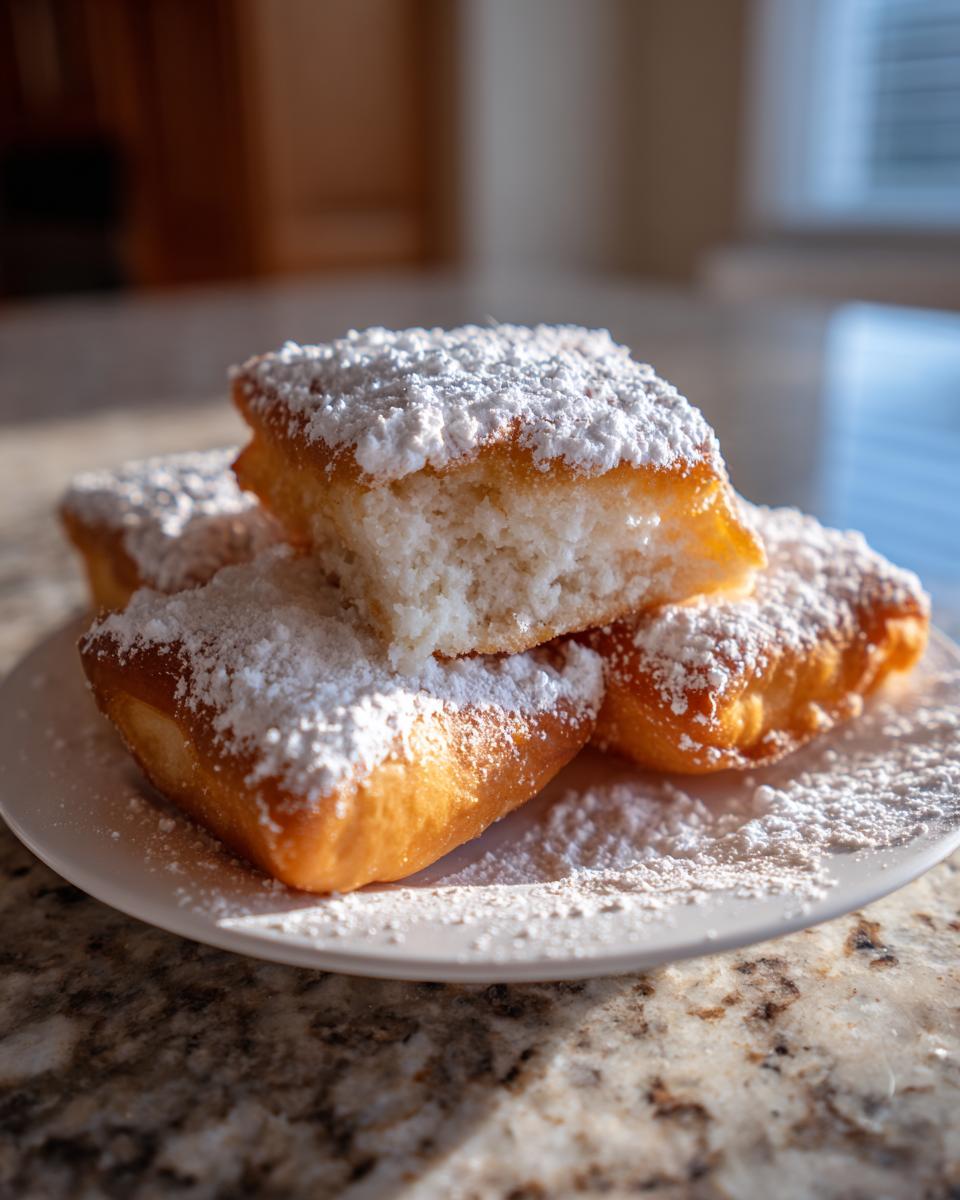
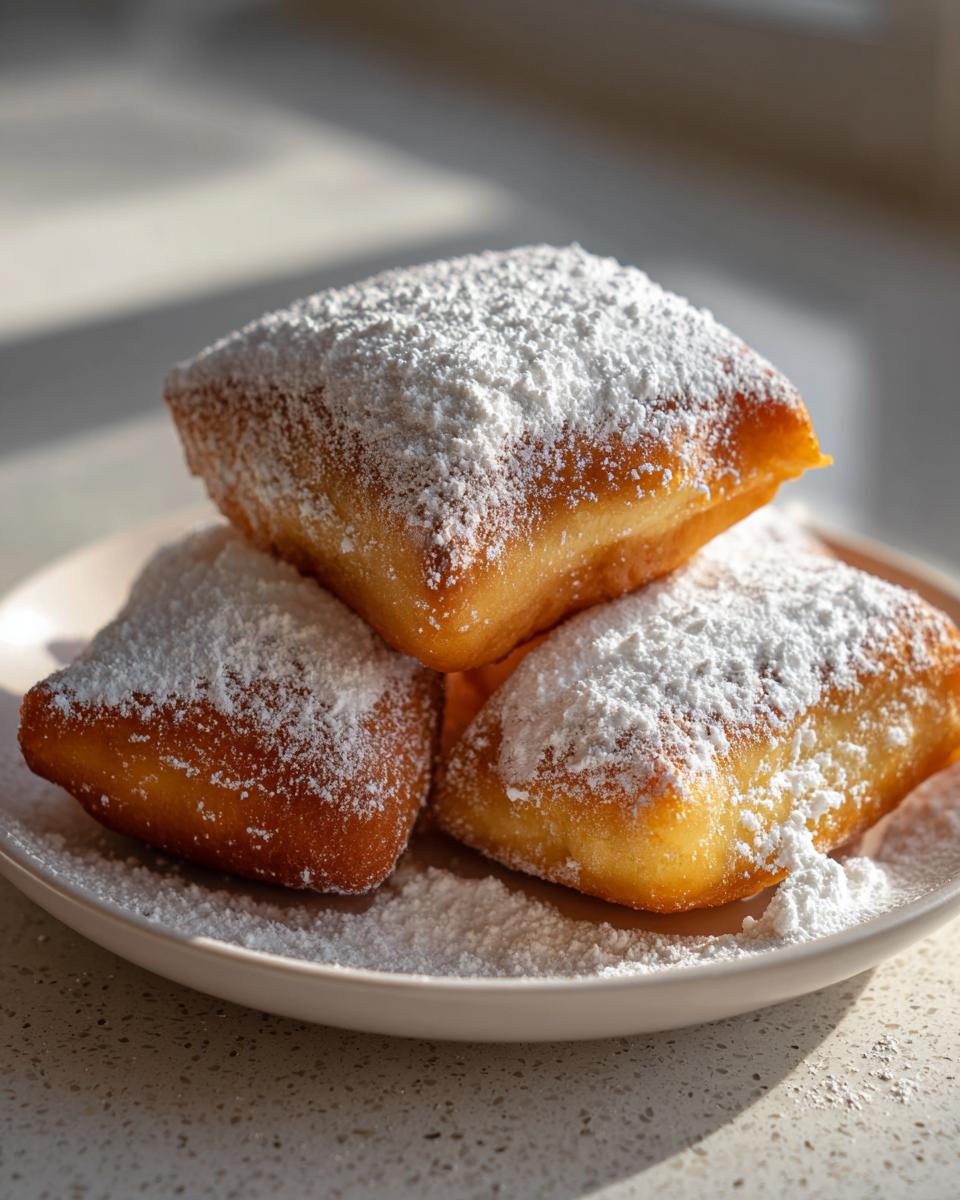
This is a classic rookie mistake! If you dust them while they are scorching hot, the powdered sugar melts immediately and turns into a sticky, thin glaze—not the delicious, fluffy white snow we want. Wait just a minute or two after they come out of the oil. They should still be very warm to the touch, but not so hot that they instantly dissolve the sugar. Dusting them generously right before serving ensures you get that signature look and texture on your Vanilla French Beignets.
Storing and Reheating Your Homemade Fried Dough
If, by some miracle, you have any of these delicious fried dough treats left over, you need to store them correctly so they don’t turn into sad, greasy frisbees! The enemies here are air and moisture. Leftover beignets are best eaten the day you make them, but if you must save them, keep them sealed up tight.
For short-term storage, an airtight container at room temperature is fine for about a day. If you need longer, the freezer is your friend. Don’t even bother with the fridge; it just makes them stale faster. To bring them back to life and get that wonderful crispness again, you need heat! See more dessert recipes here.
| Storage Method | Duration | Reheating Tip |
|---|---|---|
| Airtight Container (Room Temp) | Up to 24 hours | Quick toast in a toaster oven |
| Freezer (Airtight Bag) | Up to 1 month | Bake at 350°F until hot |
When reheating, skip the microwave! It makes them gummy. A quick three-minute blast in a toaster oven or regular oven at about 350°F will warm them through and bring back a little bit of that fresh-fried texture. Dust them with fresh powdered sugar after reheating for the best experience! If you are interested in the history of fried dough, you can read about the origins of the beignet here.
Share Your Delicious Vanilla French Beignets Creations
I put my heart into sharing this recipe for Vanilla French Beignets, and now I want to see yours! Did they puff up perfectly? Did you dust them with enough powdered sugar? Seriously, I want to hear all about your experience in the comments below. Don’t forget to give this recipe a star rating if you loved those light, fluffy pillows of joy! If you enjoy baking, check out this zucchini bread.
Print
Amazing 5-Star Vanilla French Beignets
- Total Time: 2 hours 15 minutes
- Yield: About 2 dozen beignets 1x
- Diet: Vegetarian
Description
Make delicious Vanilla French Beignets at home. This recipe yields light, fluffy fried dough dusted with powdered sugar.
Ingredients
- 1 cup warm milk (105-115°F)
- 1/4 ounce active dry yeast (about 2 1/4 teaspoons)
- 1/4 cup granulated sugar
- 1 large egg
- 1 teaspoon vanilla extract
- 1/2 teaspoon salt
- 1/4 cup unsalted butter, melted
- 3 1/2 to 4 cups all-purpose flour
- Vegetable oil, for frying
- Powdered sugar, for dusting
Instructions
- Combine warm milk, yeast, and a pinch of sugar in a large bowl. Let stand 5-10 minutes until foamy.
- Whisk in the remaining granulated sugar, egg, vanilla extract, salt, and melted butter into the yeast mixture.
- Gradually add the flour, mixing until a soft dough forms. Knead on a lightly floured surface for 5-7 minutes until smooth and elastic.
- Place the dough in a greased bowl, cover, and let rise in a warm place for 1 to 1.5 hours, or until doubled in size.
- Punch down the dough, then roll it out on a lightly floured surface to about 1/4 inch thickness. Cut into 2-3 inch squares or rectangles.
- Heat vegetable oil in a deep fryer or large pot to 350°F (175°C). Fry beignets a few at a time for 1-2 minutes per side, until golden brown and puffed.
- Remove beignets with a slotted spoon and drain on paper towels. Dust generously with powdered sugar before serving warm.
Notes
- The exact amount of flour needed depends on humidity and the type of flour you use. Start with 3 1/2 cups and add more only if the dough is too sticky to handle.
- Maintain the oil temperature between 340°F and 355°F for best results.
- Prep Time: 30 minutes
- Cook Time: 15 minutes
- Category: Dessert
- Method: Frying
- Cuisine: French
Nutrition
- Serving Size: 1 serving (approx. 2 beignets)
- Calories: 250
- Sugar: 12g
- Sodium: 150mg
- Fat: 15g
- Saturated Fat: 3g
- Unsaturated Fat: 12g
- Trans Fat: 0g
- Carbohydrates: 25g
- Fiber: 1g
- Protein: 4g
- Cholesterol: 30mg